The desire for a career change is often fueled by a potent mix of dissatisfaction with the present and idealized excitement about the future. It’s a compelling narrative: shedding the old skin, chasing a passion, and finding true vocational fulfillment. However, for most professionals, the decision to pivot is not just emotional; it is a complex financial and logistical undertaking that demands rigorous planning. The common advice—”follow your passion”—is often financially reckless if executed without a safety net.
As experts in strategic career planning and risk mitigation, we assert that the most successful career transitions are not leaps of faith, but rather meticulously engineered moves based on validated data. The solution is simple in concept, but demanding in execution: Don’t quit your day job yet. Instead, you must treat your potential new career as a beta test—a rigorous, low-stakes “test drive” that allows you to assess fit, viability, and sustainability before you surrender your primary income stream.
This comprehensive guide provides the strategic framework necessary to test drive a new career path, ensuring you gather empirical evidence about your potential future, mitigate financial risk, and transition with confidence and authority.
Don’t Quit Your Day Job Yet: How to Test Drive a New Career
The Siren Song of the Career Pivot: Why Prudence Pays
Before diving into the mechanics of testing, it is essential to understand the psychological trap many successful professionals fall into. Mid-career dissatisfaction often leads to the belief that the only solution is a radical, immediate break. This impulse is dangerous because it conflates the desire for change with the reality of the new work environment.
sumber: mlnhjux0puvh.i.optimole.com
A high-paying or stable job provides two invaluable resources necessary for a successful transition: time and money. Time allows for focused learning and networking without the pressure of immediate financial necessity, and money provides the buffer against failure. Quitting prematurely converts these assets into liabilities—you trade stability for stress, which severely hinders objective decision-making.
Our goal is to shift your mindset from “quitting to start” to “preparing to launch.” A strategic test drive validates three critical components:
- The Passion Test: Do you enjoy the daily, mundane tasks, not just the idealized outcome?
- The Viability Test: Can you realistically earn a sustainable living in this field, and how long will it take?
- The Fit Test: Does the culture, pace, and required lifestyle align with your personal values and needs?
Phase 1: Deep Internal Audit – Knowing Thyself
The first step in any strategic career pivot happens internally. Before you look outward at potential opportunities, you must objectively catalog your existing assets and define the parameters of your desired future.
Skills Audit: Transferable vs. Technical
Most career changers focus too heavily on the technical skills they lack. The real power lies in the transferable skills you already possess. These are the bridge between your current career and your future one, and they are critical selling points to a new employer or client.
Actionable Step: Create a T-Chart Analysis.
- Technical Skills (T-Skills): Industry-specific knowledge, software proficiency, certifications (e.g., GAAP accounting, Python coding).
- Transferable Skills (X-Skills): Leadership, problem-solving, budget management, stakeholder communication, conflict resolution, project management.
When testing a new career, identify which X-Skills are highest valued. If you are moving from corporate management to professional coaching, your X-Skills (communication, mentoring, goal setting) are far more valuable initially than any new technical skill you might acquire.
The Motivation Matrix: Passion vs. Practicality
Why do you want to leave your current career? Be brutally honest. Is it burnout, poor management, or a genuine misalignment with the work itself? If the issue is simply a toxic boss or a bad company culture, a lateral move might solve the problem without a full pivot.
Develop a “Motivation Matrix” where you rank the following factors for the new career:
- Intrinsic Motivation (Passion): How much do I genuinely enjoy the core activities?
- Extrinsic Motivation (Reward): What is the realistic earning potential and stability?
- Lifestyle Alignment: Does this career require 60-hour weeks, constant travel, or intense emotional labor that I am not prepared to handle long-term?
If the new career scores high on Passion but low on Lifestyle Alignment, your excitement will quickly turn to fatigue. The successful test drive seeks a balance across all three axes.
Phase 2: Low-Stakes Market Research – Defining the Target
Once you know what you bring to the table and what you truly seek, it’s time to move from internal reflection to external validation. This phase is about gathering empirical data on the day-to-day realities of your target career.
The Informational Interview Blitz (The “Coffee Chat” Strategy)
The informational interview is your primary research tool. However, most people approach these chats asking generic questions. To gain true insight, you must ask probing questions focused on the unpleasant realities, not just the successes.
Strategic Questions for the Test Drive:
- The Bad Day Question: “Describe your worst or most frustrating typical Tuesday. What are the tasks you dread doing, but that are non-negotiable parts of the job?” (This reveals the mundane realities.)
- The Skill Gap Question: “Looking back at your first year, what critical skill did you wish you had mastered that school or training failed to teach you?” (This guides your targeted upskilling.)
- The Financial Transparency Question (Phrased Delicately): “In this field, what does a realistic compensation trajectory look like for someone with 5 years of experience, and what is the typical ramp-up time until a junior professional is self-sufficient?” (This manages financial expectations.)
- The Exit Strategy Question: “What career moves do people typically make after 10 years in this role? What are the common burnout points?” (This assesses long-term sustainability.)
Aim for 10 to 15 high-quality informational interviews. Use LinkedIn, alumni networks, and professional associations. Remember, you are not asking for a job; you are conducting strategic market research.
Shadowing and Observational Learning
If possible, move beyond the coffee chat to actual observation. Many fields, particularly trades, healthcare, and creative industries, allow for short-term, structured shadowing experiences. This is often easier to arrange than a formal internship because the commitment is minimal.
- Micro-Shadowing: Ask if you can spend a half-day observing someone’s workflow, particularly during crucial meetings or task execution.
- Virtual Observation: If physical shadowing is impossible, ask professionals to walk you through their project management software, their daily schedule, or a specific deliverable they are working on. This provides tangible evidence of the workload and environment.
Analyzing the Financial Reality: Hidden Costs and Salary Expectations
A new career often comes with unexpected expenses. Test driving means budgeting for these costs while still employed:
- Education and Certification Costs: Are there required licenses, expensive software, or mandatory training courses?
- Tools and Equipment: Does the job require specialized gear (e.g., high-end camera equipment, specific computing power, liability insurance)?
- Networking and Marketing: If the new career is freelance, what is the cost of building a website, attending conferences, and marketing yourself?
Use reliable sources like the Bureau of Labor Statistics, industry salary reports, and validated data from your informational interviews to create a conservative estimate of your first three years’ salary. If this estimate falls below your minimum required income, the pivot requires either significant upskilling before the jump or a fundamental adjustment to your lifestyle expectations.
Phase 3: The Practical Test Drive – Putting Wheels on the Plan
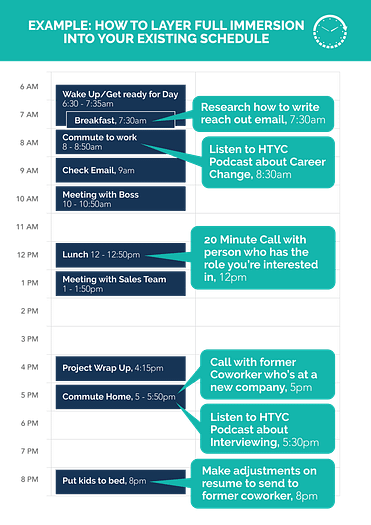
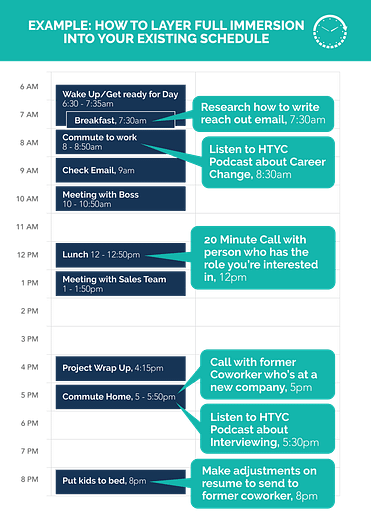
This phase is the most critical. While still drawing a paycheck, you must simulate the reality of the new career. This is where theory meets execution, often during evenings and weekends.
Strategy 1: The Side Hustle (Micro-Business Launch)
The side hustle is the gold standard for testing career viability. It forces you to deal with the administrative, marketing, and client-management aspects of the new career, not just the enjoyable core tasks.
- Start Small, Charge Low: Offer services or products at a reduced rate to gain initial clients and feedback. The goal is not profit maximization, but workflow validation.
- Manage Scope: Ensure the side hustle demands a realistic amount of time (e.g., 5–10 hours per week). This tests your ability to manage dual commitments without burning out.
- Test the Sales Cycle: If you want to be a freelance writer, the test drive involves finding clients, negotiating rates, handling revisions, and invoicing—the entire business cycle. If you hate chasing invoices, you might hate being a freelancer, regardless of how much you love writing.
Authority Insight: A side hustle reveals if your passion can withstand the pressure of client expectations, deadlines, and financial necessity—the true markers of a sustainable career.
Strategy 2: Pro Bono and Volunteer Work (Gaining Experience and Portfolio)
If the target career is difficult to monetize immediately (e.g., specialized non-profit work, data science for social good), volunteer your time to gain relevant experience and build a portfolio.
- Targeted Volunteering: Volunteer for organizations that have a direct need for the specific skill set you are trying to acquire (e.g., volunteering to manage social media for a local charity if you want to become a digital marketer).
- Create Deliverables: Ensure your volunteer work results in tangible portfolio pieces. If you are testing graphic design, produce marketing materials for the non-profit that you can show potential employers or clients.
This strategy allows you to gain real-world experience and industry contacts without the pressure of needing the income immediately, enhancing your resume significantly before you make the formal pivot.
Strategy 3: Upskilling and Certification (Simulated Workload)
Use your current job’s stability to invest heavily in formal education, but treat the coursework like a job.
- Commitment Simulation: If a Master’s program or intensive bootcamp requires 20 hours per week of study, dedicate those exact hours to the work, even when you don’t feel like it. This simulates the required commitment of the new career.
- Certifications as Milestones: Focus on industry-recognized certifications (e.g., PMP, AWS, Google Analytics). Passing these not only validates your knowledge but also demonstrates discipline and commitment to the new field to future employers.
Strategy 4: The “Vacation Test” (Immersive Experience)
Use your paid vacation time from your current job to fully immerse yourself in the new career environment.
- Take a “Working Vacation”: Instead of going to the beach, use a week of PTO to work exclusively on your side hustle, attend an industry conference, or complete a full-time, unpaid internship/shadowing experience.
- Assess the Energy Drain: By dedicating 40+ hours in a single week to the new work, you can objectively assess the emotional and intellectual energy drain. Does the work energize you, or does it leave you depleted in a way your current job does not? This is the ultimate test of long-term sustainable fit.
Phase 4: Risk Mitigation and Financial Buffer
A strategic career pivot is fundamentally a financial risk management exercise. You must establish a robust safety net before you hand in your resignation.
The Financial Runway Calculation
Your “financial runway” is the amount of time you can survive without income, based solely on your savings. Before quitting, this runway must be meticulously calculated and funded.
- Determine Monthly Minimum Expenses (MME): Calculate the absolute minimum amount needed for housing, food, insurance, and debt payments.
- Estimate Time to Profitability (TTP): Based on your test driving (side hustle income, market research), estimate how long it will take to generate 80% of your MME in the new career (e.g., 6 months).
- Fund the Buffer: Your savings goal should be MME multiplied by (TTP + 3 months emergency buffer). For most, this means having 9 to 12 months of living expenses saved before quitting.
Expert Insight: Having a long runway allows you to negotiate better rates, say no to bad clients, and focus on high-quality work rather than succumbing to financial desperation, which is the fastest way to repeat the mistakes of your previous career.
Communicating the Transition (Managing Stakeholders)
While you are test driving, transparency (where appropriate) is key.
- Employer Communication: You do not need to tell your current employer you are looking for a new job. However, if you need flexible hours for classes or volunteer work, frame it as professional development, which may even be supported by your company.
- Family Communication: Ensure your family understands the financial plan and the time commitment required for the test drive. Career change affects the entire household, and their buy-in is essential for minimizing stress during the transition period.
When to Accelerate: Recognizing the Green Light
The test drive phase is complete when you have accumulated enough evidence to confidently answer the following questions affirmatively:
- Is the daily routine enjoyable? You have experienced the “bad Tuesdays” and still find the work compelling.
- Is the income projection viable? Your side hustle or market research confirms you can reach financial self-sufficiency within your calculated runway.
- Is your network established? You have built a core group of contacts (mentors, peers, and potential clients/employers) who can support your entry into the field.
- Do you have a portfolio? You have tangible, high-quality deliverables that prove your capability and minimize the risk for a new employer or client.
When you reach a point where your side hustle requires more time and attention than your current job can spare, and your savings buffer is fully funded, that is your strategic green light. You are no longer taking a leap of faith; you are initiating a controlled, calculated launch based on months (or even years) of empirical evidence.
The best career pivots are not acts of impulsive bravery, but demonstrations of superior strategic planning. By rigorously test driving your new career while maintaining the security of your day job, you transition from a hopeful novice to a validated professional, minimizing risk and maximizing your potential for long-term success.
Do not quit yet. Start testing today.
sumber : Youtube.com