The concept of early retirement, once reserved for those with lucrative corporate exit packages or significant inheritances, has been radically democratized. Today, the most powerful tool for accelerating your timeline to Financial Independence, Retire Early (F.I.R.E.), isn’t a massive salary increase—it’s the strategic deployment of income generated from a side hustle.
A side hustle transforms the traditional 9-to-5 financial model. It provides capital that is psychologically “extra,” making it easier to dedicate entirely to long-term investment goals without feeling the pinch on your core lifestyle. However, simply earning extra money is only half the equation. The true mastery lies in knowing exactly where and how to invest that variable, often sporadic, income stream to yield maximum returns and minimize tax burden.
This comprehensive guide is designed for the ambitious side hustler ready to turn supplementary income into freedom fuel. We will move beyond generic advice, offering a structured, phase-based strategy focused on tax efficiency, robust account structures, and proven investment vehicles that pave the fastest path to early retirement.
The Definitive Guide to Investing Your Side Hustle Money: Accelerating the Path to Early Retirement
Why Side Hustle Income is the Ultimate Investment Catalyst
Before diving into the mechanics of investing, it is crucial to understand the unique advantage side hustle income offers over primary job income. This understanding fuels the discipline required to maintain the strategy.
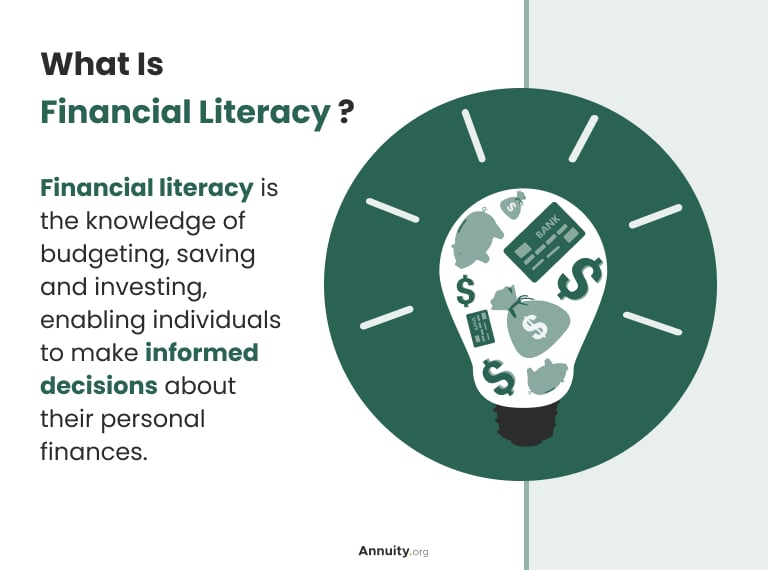
sumber: www.annuity.org
The Power of Found Money Psychology
When you receive your primary paycheck, it is immediately mentally allocated to fixed expenses: rent, mortgage, groceries, and bills. It is “necessary money.” Side hustle income, conversely, often feels like “found money.” Because your core lifestyle is already covered, there is far less psychological resistance to earmarking 100% of this supplementary income for investment. This mental separation is the key to maintaining a high savings rate—the most critical variable in achieving early retirement.
Bypassing Lifestyle Creep
One of the greatest impediments to F.I.R.E. is lifestyle creep—as income rises, so do expenses. Side hustle income provides a perfect shield against this. By immediately transferring side income from your checking account directly into investment vehicles, you never allow that money to integrate into your operational budget. The money is earned, invested, and forgotten, preserving your current, sustainable spending level while your wealth quietly compounds.
The Compounding Advantage: Compressing the Timeline
The F.I.R.E. movement is built on the concept that your timeline to independence is determined by your savings rate, not just your income level. A typical savings rate is 10–15%. Leveraging a side hustle allows you to push that rate to 40%, 50%, or even higher, drastically reducing the required working years. For example, moving from a 15% savings rate (requiring 43 years of work) to a 50% savings rate (requiring 17 years of work) is often only achievable by dedicating a secondary income stream entirely to investment.
Phase 1: Building the Financial Launchpad (Foundation First)
Before any side hustle dollar touches the stock market, you must ensure your financial foundation is solid. Investing while carrying high-interest debt or lacking an emergency fund is akin to driving with the brakes on.
Eradicating High-Interest Debt
The guaranteed return on investment (ROI) you receive from paying off high-interest debt (like credit cards, personal loans, or high-rate auto loans) almost always outweighs the potential returns of the stock market. If you are paying 18% interest on a credit card, paying that debt down is an immediate, risk-free 18% return on your money. Dedicate the initial side hustle profits to wiping out any debt exceeding 5–6% interest.
Building the Side Hustle Safety Net
Side hustle income is inherently volatile. One month might be fantastic; the next might be dry. This variability necessitates a robust emergency fund. While standard advice suggests 3–6 months of living expenses, the self-employed or side hustler often benefits from 6–12 months of expenses, held in a high-yield savings account (HYSA). This buffer prevents market timing mistakes—i.e., being forced to sell investments during a downturn because you need cash for unexpected expenses.
Maximizing Employer Match (The 100% Return)
If you maintain a primary job, ensure you are contributing enough to your employer-sponsored 401(k) to capture the full matching contribution. This is an immediate, guaranteed 100% return on that portion of your investment. While this money may not strictly come from your side hustle, ensuring this foundation is laid frees up the side hustle money for more strategic, self-directed investments.
Phase 2: Strategic Allocation—The Self-Employed Investment Accounts
The single greatest advantage available to side hustlers aiming for early retirement is access to powerful, self-employment specific retirement accounts. These accounts dramatically increase the amount of money you can shelter from taxes annually.
Tax-Advantaged Accounts: The Non-Negotiables
Your first investment priority must be maximizing contributions to tax-advantaged accounts:
- Health Savings Account (HSA): Often called the “Triple-Tax Advantage” account. Contributions are tax-deductible, growth is tax-free, and withdrawals for qualified medical expenses are tax-free. If you are healthy, the HSA functions as an excellent, flexible retirement account after age 65.
- Roth IRA: Contributions are made with after-tax money, but all growth and qualified withdrawals in retirement are tax-free. This is ideal if you believe your tax rate will be higher in retirement than it is today.
- Traditional IRA: Contributions are often tax-deductible now, reducing your current taxable income. Withdrawals are taxed as ordinary income in retirement. This is ideal if you believe your tax rate is higher today than it will be in retirement.
The Side Hustler’s Secret Weapon: Solo 401(k) and SEP IRA
For side hustlers whose profits are substantial, the annual contribution limits of standard IRAs are quickly exceeded. This is where self-employment retirement plans become essential. These plans allow you to contribute in two capacities: as the “employee” and as the “employer.”
The Solo 401(k)
If you have no full-time employees other than your spouse, the Solo 401(k) is arguably the best vehicle. It allows for massive contributions:
- Employee Contribution: Up to the annual maximum ($23,000 for 2024, plus catch-up contributions).
- Employer Contribution (Profit Sharing): Up to 20% of your net adjusted self-employment income (25% if incorporated).
This dual contribution mechanism means a highly profitable side hustle can shelter tens of thousands of dollars from taxes every year, dramatically accelerating your investment principal.
The SEP IRA (Simplified Employee Pension)
The SEP IRA is simpler to set up and manage than the Solo 401(k) and is based purely on the employer contribution model. You can contribute up to 25% of your net adjusted self-employment income (up to the annual limit). While it lacks the high employee contribution feature of the Solo 401(k), it is perfect for those with highly variable income who prefer simplicity and might wait until tax time to calculate and make contributions.
Taxable Brokerage Accounts (The F.I.R.E. Bridge)
Once you have maxed out all tax-advantaged space, the remaining side hustle funds must go into a standard taxable brokerage account. While these accounts do not offer immediate tax breaks, they are essential for F.I.R.E. candidates because of their liquidity.
Retirement accounts (401(k), IRA) typically penalize withdrawals before age 59.5. If you plan to retire in your 40s or early 50s, you need liquid funds to cover expenses until you can access your tax-sheltered money without penalty. The taxable brokerage account acts as the necessary “bridge account.”
Phase 3: Investment Vehicles for Accelerated Growth
The account structure is the container; the investment vehicle is the fuel. For early retirement, the focus must be on reliable, low-cost growth and diversification.
Low-Cost Index Funds: The F.I.R.E. Community Staple
For the vast majority of investors, the most effective long-term strategy is passive investing in globally diversified, low-cost index funds or ETFs (Exchange-Traded Funds). These funds track the performance of the entire market (e.g., VTSAX, VTIAX, or equivalent ETFs like VTI and VXUS).
- Why this works for F.I.R.E.: They offer broad diversification, minimal expense ratios (keeping more of your returns), and historically reliable returns over long periods. They eliminate the need for costly and often unsuccessful stock picking.
- Strategy: Utilize dollar-cost averaging (DCA). Since side hustle income is often sporadic, immediately invest the money when it comes in, regardless of market conditions. This automates the process and removes emotion.
Real Estate Investment Trusts (REITs) and Syndication
While direct real estate investment can be lucrative, it is highly time-intensive, which defeats the purpose of maintaining a separate side hustle. For passive exposure to real estate, consider:
- REITs: These allow you to invest in a portfolio of income-producing real estate (commercial, residential, or industrial) without the hassle of being a landlord. They offer diversification and mandatory dividend payouts, providing a steady stream of passive income.
- Real Estate Syndication/Crowdfunding: For accredited investors, platforms offering equity in large commercial deals can provide higher potential returns and tax advantages (depreciation pass-throughs) without requiring management time.
Reinvesting in the Hustle: When the Business is the Best Investment
Sometimes, the highest ROI is not in the stock market but back into the source of the capital itself. If your side hustle is a business (e.g., consulting, e-commerce, software development), spending money to scale it can generate phenomenal returns.
- Examples: Investing in better equipment, hiring a virtual assistant to free up your time for high-value tasks, or purchasing targeted advertising.
- Caveat: This is a high-risk, high-reward strategy. It should only be pursued if the business has proven profitability and the investment is calculated to directly increase revenue or efficiency.
The Side Hustle Investor’s Mindset: Critical Principles for Sustainability
Achieving early retirement requires more than just smart investing; it demands behavioral discipline and continuous optimization.
Automate the Transfer: Treating the Hustle Like a Bill
The biggest psychological hurdle is seeing the side hustle money sit in your checking account. To combat this, set up an automatic transfer. As soon as a client pays or a sale is made, schedule an immediate transfer to the brokerage or retirement account. Treat the investment account like a non-negotiable monthly bill. This prevents the money from being accidentally spent or absorbed into your monthly budget.
Calculating and Tracking Your “F.I.R.E. Number”
Early retirement requires a target, known as the F.I.R.E. Number. This is typically calculated using the 4% Rule: 25 times your desired annual expenses. For example, if you need $60,000 per year, your F.I.R.E. Number is $1.5 million.
Use tracking software (like Personal Capital or spreadsheets) to constantly monitor your progress toward this number. Seeing the side hustle contributions visibly shrink the years remaining until retirement is a powerful motivator to keep hustling and investing.
Handling Variable Income: The Buffer Strategy
Side hustle income is inherently inconsistent. To manage this volatility within your investment plan, implement a two-pronged buffer system:
- The Tax Buffer: Set aside 25–30% of every payment immediately into a separate HYSA to cover quarterly estimated taxes (self-employment tax). This prevents scrambling when tax deadlines hit.
- The Investment Buffer: Create a separate “Investment Holding Account.” When money comes in, it first pools here. Once the account hits a predetermined threshold (e.g., $1,000 or $5,000), transfer the entire sum into your diversified index funds. This allows you to deploy larger chunks of capital efficiently while managing the flow of small, irregular payments.
Minimizing Tax Drag: Tax-Loss Harvesting and Location
In your taxable brokerage accounts, you must be hyper-aware of “tax drag”—the reduction in returns due to taxes on dividends and capital gains.
- Tax-Loss Harvesting (TLH): When an investment in your taxable account loses value, you can sell it to offset capital gains realized elsewhere, reducing your tax bill. You can immediately buy a similar, but not substantially identical, fund to maintain market exposure (e.g., selling a Vanguard S&P 500 fund and buying a Fidelity S&P 500 fund).
- Tax Location Strategy: Place investments that generate high ordinary income (like REITs or bond funds) into tax-advantaged accounts (IRA/401(k)). Place assets that generate qualified dividends and long-term capital gains (like broad-market index funds) into taxable accounts, as these are taxed at favorable long-term capital gains rates.
Common Pitfalls to Avoid on the F.I.R.E. Path
The rush to retire early often leads to shortcuts and mistakes that can derail the entire plan. World-class investors know that avoiding major losses is often more important than chasing huge gains.
The Temptation of Exotic and High-Risk Investments
Side hustle money often feels like “play money,” tempting investors to put it into highly speculative assets (e.g., individual meme stocks, leveraged funds, or highly illiquid private deals). While a small, defined percentage (5% or less) of your portfolio can be allocated to calculated risk, the core of your F.I.R.E. portfolio must be stable, diversified, and reliable. Early retirement is a marathon, not a sprint; consistency beats speculation.
Ignoring Self-Employment Taxes (The 15.3% Shock)
For side hustlers operating as sole proprietors or freelancers, you are responsible for paying the full Social Security and Medicare taxes (the 15.3% self-employment tax), not just the employee’s half. Failing to budget for and pay quarterly estimated taxes can result in significant penalties and interest from the IRS. Always consult a tax professional familiar with Schedule C filings to ensure compliance.
Burnout: The Sustainability Factor
The aggressive pursuit of F.I.R.E. through dual incomes often leads to burnout. If your side hustle consumes all your evenings and weekends, leading to stress, relationship strain, or health issues, the entire process becomes unsustainable. Early retirement is meaningless if you ruin your health getting there. Periodically audit your hours, automate tasks where possible, and ensure the side hustle remains a tool for freedom, not a second full-time job.
Conclusion: Side Hustle Money is Freedom Currency
Investing your side hustle money is not about finding obscure stocks or mastering complex trading strategies. It is about discipline, efficiency, and leveraging the powerful tax structures designed for self-employment.
By treating your side income with respect—immediately allocating it to strategic accounts, prioritizing debt elimination, and deploying it into low-cost, diversified assets—you transform that extra cash flow into a highly effective engine for wealth creation.
The path to early retirement requires maximizing your savings rate, and the side hustle is the fastest, most accessible way for most people to achieve that goal without fundamentally altering their day-to-day life. Start today by setting up those tax-advantaged accounts, automating your transfers, and watching your timeline to financial independence shrink dramatically.
The money you earn outside of your primary job is more than just extra income; it is your freedom currency. Invest it wisely, and the freedom of early retirement will move from a distant dream to a measurable reality.
sumber : Youtube.com