In the modern corporate landscape, the path to promotion is rarely linear. Waiting for annual reviews or hoping your current responsibilities will magically expand to meet the requirements of a senior role often leads to career stagnation. High-level promotions—those that involve significant jumps in authority, compensation, and strategic influence—require more than just competence; they require tangible, quantifiable evidence of skills that you haven’t yet been officially assigned.
This is where the strategic side job, or “side hustle,” transforms from a mere source of supplementary income into the most powerful tool in your career acceleration arsenal. It is not about burning the candle at both ends; it is about intentional, low-stakes experimentation that allows you to build a robust, promotion-worthy portfolio of work that your primary employer could never provide. This article will serve as your comprehensive guide to leveraging external projects to fill critical skill gaps, demonstrate leadership, and ultimately, secure that next major promotion.
The Strategic Side Hustle: Building a Promotion-Worthy Portfolio That Accelerates Your Career
The Career Stagnation Trap and the Need for External Evidence
Many professionals find themselves excellent at their current job, yet unable to advance. They hit a wall where the skills required for the next level—often strategic planning, team management, budget accountability, or cross-functional leadership—are skills they haven’t had the official opportunity to practice. If you are a Senior Analyst seeking a Manager role, your current job might only offer analytical tasks, not management experience. This creates a classic Catch-22:
- You need the experience to get the promotion.
- You need the promotion to get the experience.
A portfolio built through strategic side work shatters this cycle. It allows you to create your own proving ground. When you present your case for promotion, you are no longer making promises based on potential; you are presenting facts based on performance achieved outside the constraints of your current role.
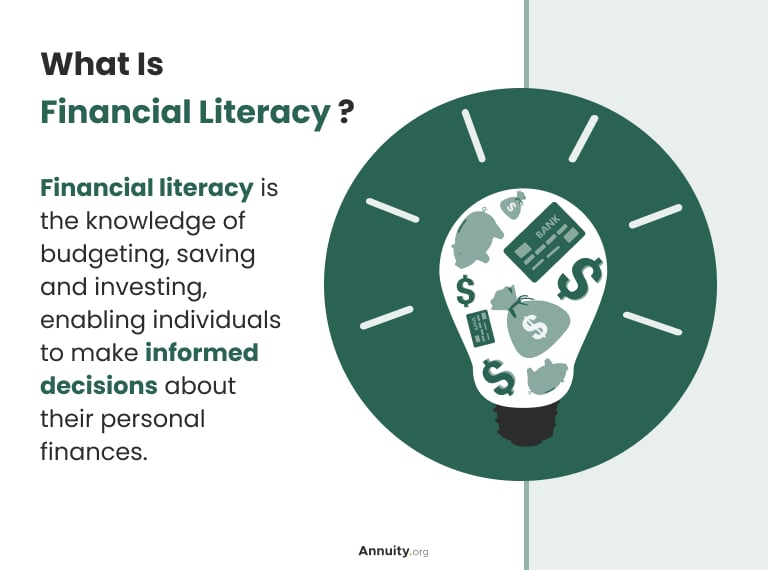
sumber: www.annuity.org
Why Internal Projects Often Fall Short
While volunteering for internal stretch assignments is valuable, these projects often come with inherent limitations when building a promotion portfolio:
- Limited Scope and Autonomy: Internal projects are typically highly supervised and constrained by existing company policies, limiting your ability to make high-level strategic decisions.
- Lack of Ownership: The final result often belongs to a department or team, diluting your individual contribution.
- Risk Aversion: Companies are naturally risk-averse. Side projects, especially consulting or freelance work, allow you to tackle high-risk, high-reward scenarios that demonstrate entrepreneurial thinking—a key trait for senior leadership.
Defining the Strategic Side Job: Portfolio vs. Paycheck
The first critical shift is mental: recognize that this external work is not primarily about the money (though income is a welcome benefit). It is a deliberate, targeted investment in your future career trajectory. Every hour spent on a side project must be evaluated based on the promotional evidence it generates.
Identifying Your Target Promotion’s Skill Gaps
Before launching any side venture, you must meticulously audit the job description for the role you aspire to. This audit reveals the precise gaps your portfolio must address.
- Analyze the Target Role: Review the job description for the next level up (e.g., Manager, Director, VP). Highlight the verbs and nouns that represent skills you currently lack experience in (e.g., “Manage a team of 5,” “Oversee a $50,000 budget,” “Develop global strategy”).
- Assess Your Current Role: Identify where your current job falls short. If your current role involves execution but the target role requires strategy, your side job must be strategic.
- Design the Side Project as a Solution: Choose a side job that forces you to practice the missing skills.
- If you need Budget Management: Take on a small freelance contract where you are responsible for defining the project scope, managing third-party vendor payments, and tracking profitability.
- If you need Team Leadership: Start a small community project or volunteer effort where you recruit, train, and manage a small team of volunteers or contractors.
- If you need Sales/P&L Experience: Launch a small e-commerce venture or a niche consulting service where you handle all aspects of client acquisition and financial reporting.
The Power of Low-Stakes Experimentation
One of the greatest benefits of external work is the ability to fail safely. In your primary job, a strategic misstep can cost millions and impact your reputation. In a side project, a mistake is a cheap, valuable lesson.
Senior leadership values candidates who have demonstrated the ability to take calculated risks and learn from setbacks. A portfolio that includes a documented failure—and the subsequent pivot that led to success—is far more compelling than a perfectly curated list of safe wins. This demonstrates resilience, adaptability, and true business acumen.
The Blueprint for Portfolio Construction: From Concept to Proof
A successful promotion portfolio is not a collection of résumés; it is a case study library. Each side project must be documented in a way that directly speaks to the competencies required by your target promotion.
Phase 1: Alignment and Ethical Considerations (The E-A-T Foundation)
Before accepting any external work, you must establish an ethical and legal framework. This step is crucial for maintaining trustworthiness with your primary employer.
- Review Your Employment Contract: Understand any non-compete clauses, intellectual property agreements, or conflict-of-interest policies.
- Ensure No Conflict of Interest: Your side job must not compete directly with your main employer or use proprietary information. For instance, if you work for a major accounting firm, do not start an independent accounting firm on the side without explicit approval.
- Transparency (Where Appropriate): While you don’t need to detail every transaction, having a general discussion with your manager or HR about your efforts to gain new skills through external projects can build trust. Frame it as “professional development” rather than “extra income.”
- Time Management: Never let the side job compromise your performance in your primary role. The side work must be done on nights and weekends. If your performance dips, the entire premise—that you are ready for more responsibility—is undermined.
Phase 2: Execution and Quantification
The difference between a hobby and a promotion-worthy project lies in metrics. Senior leadership cares about outcomes, efficiency, and ROI.
Focus on Quantifiable Outcomes (KPIs):
- Initial State vs. Final State: Always document the starting challenge and the measurable result.
- Bad Example: “Helped a small business with their marketing.”
- Good Example: “Designed and executed a three-month digital marketing strategy for a local startup, resulting in a 45% increase in lead generation and a 15% reduction in customer acquisition cost, demonstrating expertise in budget allocation and funnel optimization.”
- Leadership and Team Metrics: If you managed people, quantify the impact of your leadership.
- Example: “Recruited and trained three freelance writers, improving project turnaround time by 25% and maintaining a 95% client satisfaction rating, evidencing mentorship and team efficiency.”
- Financial Metrics: Always include financial accountability, even if the numbers are small.
- Example: “Managed a $5,000 capital expenditure budget for website redesign, delivering the project 10% under budget while achieving all defined scope requirements.”
Phase 3: Packaging the Evidence (The Presentation)
Your portfolio should be a polished, professional document—a pitch deck or a formal case study binder—ready to be presented during salary negotiations or promotion reviews.
For each major side project, include:
- The Challenge (The Context): What was the client/project goal? What skills did this require that your current job doesn’t offer?
- Your Strategy (The Approach): Detail the strategic decisions you made, why you chose that path, and the resources you managed (people, budget, time).
- The Outcome (The Result): Present the quantified results, clearly linking them back to key performance indicators (KPIs) that matter to your employer (e.g., efficiency, profitability, risk mitigation).
- The Learning (The Insight): What did you learn that you can now apply to your primary company? This is the crucial bridge that translates external success into internal value.
Translating Side Hustle Success into Internal Value
Having a great portfolio is only half the battle; you must effectively communicate its relevance to your primary employer. The goal is to make the promotion decision easy by demonstrating that you are already operating at the required level, just in a different sandbox.
Speaking the Language of Leadership
When discussing your portfolio with senior management, avoid focusing on the technical details of the side job. Instead, focus on the transferable strategic competencies.
- Instead of: “I built a website for a client.”
- Say: “Through my external consulting work, I successfully managed a full-cycle digital transformation project, overseeing vendor selection, budget allocation, and stakeholder alignment—skills directly applicable to leading our upcoming Q3 platform migration.”
- Instead of: “I had to fire a difficult contractor.”
- Say: “I navigated a complex personnel challenge in my external venture, requiring difficult conflict resolution and rapid restructuring to maintain project velocity, demonstrating the leadership maturity necessary for managing a larger internal team.”
By framing your side job results using the same terminology and priorities (risk, budget, ROI, efficiency) that your company uses, you eliminate the mental barrier between your external work and your internal potential.
The E-A-T Advantage: Why External Projects Carry More Weight
In the eyes of management, external projects often carry greater weight than internal assignments because they demonstrate genuine Expertise, Authoritativeness, and Trustworthiness (E-A-T).
- Expertise (Market Validation): Getting paid by an external entity validates that your skills are competitive and valuable in the open market. This is a level of proof that internal recognition alone cannot provide.
- Authoritativeness (Entrepreneurial Drive): Starting and sustaining a side venture demonstrates initiative, self-motivation, and an entrepreneurial mindset—qualities essential for senior roles that require independent problem-solving.
- Trustworthiness (Financial Acumen): Successfully managing external budgets, clients, and contracts proves you can handle financial accountability without the safety net of the corporate structure. This builds trust in your ability to manage larger, internal budgets.
Common Pitfalls and Mitigation Strategies
While the strategic side job is a powerful tool, misuse can jeopardize your primary career. Awareness and mitigation of these common pitfalls are essential.
Pitfall 1: The Scope Creep of Time
Side jobs often demand more time than anticipated, leading to burnout or diminished focus on your primary role. If your work performance suffers, the side job becomes a liability, not an asset.
Mitigation: Treat your side job like a project with strict boundaries. Schedule specific, non-negotiable hours (e.g., Saturday mornings, two evenings a week). If the project demands more time, increase the price or reduce the scope. Protect your primary job performance at all costs.
Pitfall 2: The Perception of Distraction
If management suspects you are more invested in your side hustle than your main job, they will hesitate to promote you, fearing you will leave soon after gaining the new title.
Mitigation: Frame the side job as active professional development and skill acquisition. Explicitly tie the skills gained back to the company’s strategic goals. Always over-deliver in your primary role so that your side work is seen as a sign of high energy and capacity, not distraction.
Pitfall 3: The Lack of Measurable Results
A portfolio based on anecdotal evidence or vague descriptions is useless. If you can’t quantify the impact, it’s just a story.
Mitigation: From the very start, define the KPIs for your external project. Use tools to track time, budget, and client feedback diligently. If you consult, ask clients for testimonials that specifically mention the measurable improvements you delivered (e.g., “reduced churn by 10%”).
Conclusion: Investing in Your Own Career Velocity
Building a portfolio through strategic external work fundamentally shifts the power dynamic in your career. You move from being a passive recipient of opportunities to an active creator of evidence. You stop asking permission to gain experience and start proving that you already possess the strategic capabilities required for the next level.
The strategic side hustle is the ultimate demonstration of E-A-T: it proves your Expertise through real-world market application, establishes your Authoritativeness by forcing you to take ownership and risk, and builds Trustworthiness by demonstrating financial accountability and ethical alignment.
If you are ready to stop waiting for your promotion and start earning it, the time to design your career portfolio is now. Identify the gap, find the proving ground, quantify the results, and present the unassailable evidence of your readiness for senior leadership.
sumber : Youtube.com